HomeVoltage current tester

Voltage current tester

(1001 products found)

Related results:
Express

Frequently Asked Questions about Voltage current tester

How do I choose the right voltage and current tester for my electrical work?
Start by deciding between a clamp-on meter and a handheld digital tester. For most electrical tasks, select a unit that can measure AC/DC voltage up to 600 V, current up to 600 A, and shows readings on a 4000-count True RMS display to handle non‑sinusoidal loads. Look for auto-ranging, non-contact voltage detection (NCV), data hold, and a backlit display to work safely in dim spaces. Examples in this range include models with 34 mm jaw openings, NCV, and testing for capacitance, resistance, and frequency, such as the ANENG PN200.
What does the most complex attribute, True RMS with auto range and NCV, mean in practice?
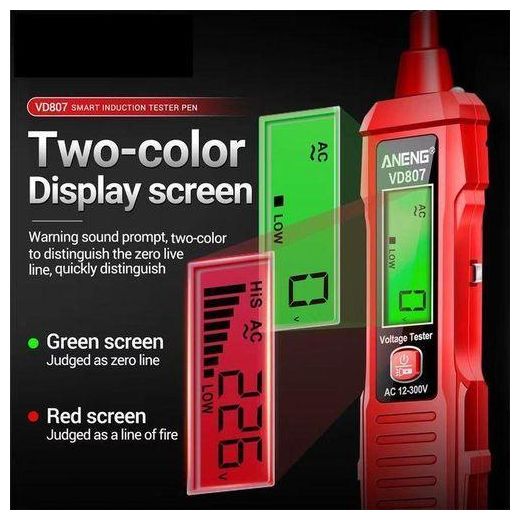
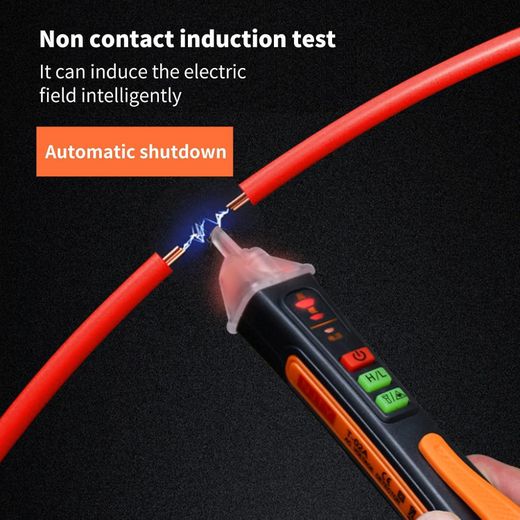
True RMS gives accurate readings for non‑sinusoidal waveforms found in modern equipment, so AC voltage and current reflect actual performance rather than an ideal sine wave. Auto-ranging removes the need to select a measurement scale, speeding up work and reducing errors. NCV, or non‑contact voltage detection, alerts you to live wires without touching conductors, enhancing safety. Together, these features enable fast, reliable measurements across devices from lighting to motor circuits, even in tricky electrical environments.
Which usage scenario best fits these testers, professional vs. DIY?
For a professional electrician, these testers excel when you need rugged, fast readings across wiring and equipment, measuring AC/DC voltage up to 600 V and current up to 600 A while offering NCV and multi‑mode testing (resistance, capacitance, frequency). For a DIY hobbyist, a simpler unit with auto-ranging, a backlit display, and essential tests (voltage, resistance, diode/continuity) often suffices and keeps operations straightforward and affordable. The range includes models with both kinds of features to match your frequency of use.
How should I maintain and care for the tester to ensure longevity?
Keep probes clean and dry, and store the instrument in a protective case to prevent damage to the jaw and display. Regularly inspect the probes for nicks or cracks and replace batteries when the low‑battery indicator appears. Use the device within its voltage and current limits (up to 600 V and 600 A) and avoid exposing it to moisture or dew. Calibrate or have maintenance checked periodically where available to preserve accuracy over time.
How can I safely use these testers on live circuits?
Before touching any live conductors, use NCV to scan for voltage without contact, then isolate or de‑energize the circuit whenever possible. Wear appropriate PPE and keep fingers behind insulated grips while probing. Use the clamp to capture current without breaking the circuit, and always follow the instrument’s safety guidelines for CAT rating and probe placement. Begin measurements with the lowest range and only increase as needed to protect the device and yourself.
What other capabilities are common across these models besides voltage and current?
Beyond voltage and current, these testers typically measure resistance, capacitance, and diode/continuity, with some models offering a frequency (Hz) feature and data hold. Backlit displays improve readability in dark panels, and auto power‑off helps conserve battery life during long jobs. You may also encounter a 34 mm jaw opening for larger conductors and a capacitance tester to diagnose circuits with capacitors, which broadens the tool’s usefulness for both DIY and professional electrical tasks.