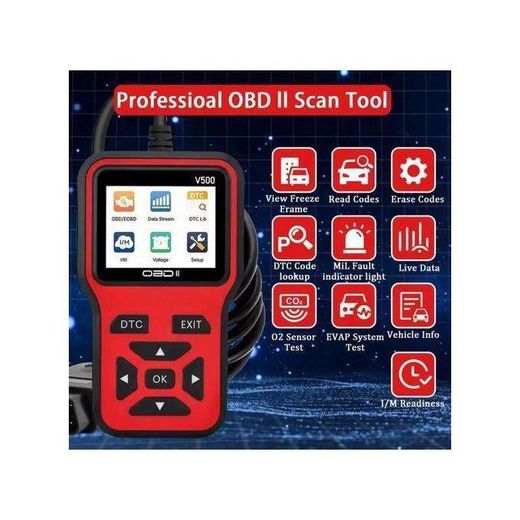
HomeObd scanner
Express

Frequently Asked Questions about Obd scanner

How do I choose the right OBD scanner for my vehicle?
Choose an OBD scanner that is compatible with OBDII/EOBD nine standard protocols and works with vehicles manufactured from 1996 onward. If you want wireless use, select a Bluetooth model with a practical range of about 5–10 meters. A device that can clear fault codes and turn off the MIL while offering reliable live data makes diagnostics straightforward and efficient across most modern cars.
What data and features matter most when selecting an OBD scanner?
Key features include the ability to clear fault codes, retrieve the VIN, view live data streams, test O2 sensors, and perform emission-related checks. A robust library of diagnostic trouble codes (DTCs) helps you interpret issues, while a battery voltage tester provides quick electrical health checks. Look for scanners that support I/M readiness checks to gauge whether a vehicle is ready for inspection.
Which usage scenarios are best for OBD scanners?
DIY enthusiasts use OBD scanners to identify why a Check Engine Light is on and to monitor live engine data, while professional mechanics rely on this tool to quickly diagnose faults and assess vehicle readiness. Bluetooth-enabled scanners pair with phones or tablets for on-the-go diagnostics, whereas wired models connect to laptops or dedicated diagnostic devices in a shop setting.
What maintenance or compatibility steps should I follow?
Pair the scanner with a compatible smartphone or PC and keep its software up to date to access current diagnostic codes. Ensure your vehicle is OBDII compliant and within 5–10 meters range for wireless models. Regularly clear checked faults when you have resolved the underlying issue and avoid clearing codes without confirming the repair, as some issues require persistent monitoring.
What safety considerations should I keep in mind?
Use the scanner as an aid for diagnosing engine and emission issues, not as a substitute for professional mechanical advice. Avoid making repairs based solely on generic DTCs; confirm fault codes with live data, or consult a qualified technician for complex problems to prevent accidental misdiagnosis.
What features should I look for in a comprehensive OBD kit?
Seek kits that offer essential functions like OBDII/EOBD protocol support, VIN retrieval, live data streaming, and the ability to read and clear error codes. Additional tools such as a battery voltage tester and an emission readiness test expand the toolkit, while a Bluetooth version provides convenient wireless operation for frequent users.