HomeLaser Level Measuring Tool

Laser Level Measuring Tool

(931 products found)

Express

Frequently Asked Questions about Laser Level Measuring Tool

How do I choose the right Laser Level Measuring Tool type for my projects?
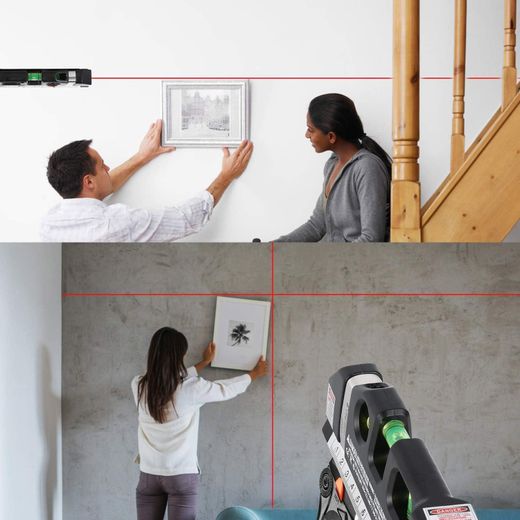
The right choice depends on your project needs and the environment you’ll work in. For tiling, setting doors, or frames, choose a device with a red cross-line light pattern that can project lines at enough distance and is portable. For example, a short model features an ABS+TPR build and a 625 nm ±5 nm cross-line light suitable for indoor work. Also look for projection modes (2-line, 3-line, or 360° cross) so you can pick the right option for your job, with visible range up to 8–10 m.
What are the details of Projection Modes and Self-Leveling, and how do I choose for my tasks?
Projection modes show how the lines appear: there are 2-line, 3-line, and 360° cross-line options. For construction and repair work, a 3-line module lets you display horizontal, vertical, and cross lines at the same time. Some models also allow combinations like horizontal line, cross horizontal line, and vertical horizontal line. Self-leveling makes the line more accurate by reducing the impact of uneven surfaces. Choose a mode based on your tasks—for example, tiling benefits most from 3-line or 360° cross, while quick accuracy tasks may only need the 2-line mode.
Use-case example for two users: who benefits most from a Laser Level Measuring Tool?
A construction engineer looks for a sturdy build, optional 360° cross support, and self-leveling for measuring accurately on walls and large floors in difficult areas. A home DIY user will appreciate a smaller, easy-to-use device with standard cross-line projection and visibility for short distances. In this sense, choose a tool that supports tiling placement, correcting bookcase positioning, and arranging items around the home efficiently.
Maintenance and safety: what tips will help you maintain these devices?
Be careful and clean the lens regularly with a soft cloth to remove smudges and dirt that can affect accuracy. Power the device with appropriate batteries like 4.5V or 3 AA, depending on the model, and store it in a pouch or built-in case. If you use a model with water-resistant capability (waterproof), test it with rain carefully. Avoid leaving it in extreme heat or direct rain, and follow the manufacturer’s guidance for routine adjustments to maintain line performance.
Light color options and their differences: red vs green vs infrared—how do they compare?
Red light is typically well visible indoors, such as a 3-line setup with a 625 nm wavelength mentioned in some models. Some models show a “Green Light” feature but use an 808 nm infrared beam that isn’t visible to the naked eye. This means you should choose based on how clearly the light is visible in your working conditions—indoors and near walls, and even in brighter environments. The best solution is to pick the light type suited to your typical working scenario and indoor visibility needs.
Battery capacity and extra accessories: what provides longer working time, and what’s available among the accessories?
Some models mention a working time of around 8 hours for continuous use, especially for versions that use rechargeable/no-wire batteries. Power type and accessories also vary—some include a storage bag (and a stabilizing foot/leg support key) for convenient carrying, while others may have different battery-cycling setups. Check what power method the device supports with the available options so you can keep working longer without interruptions.