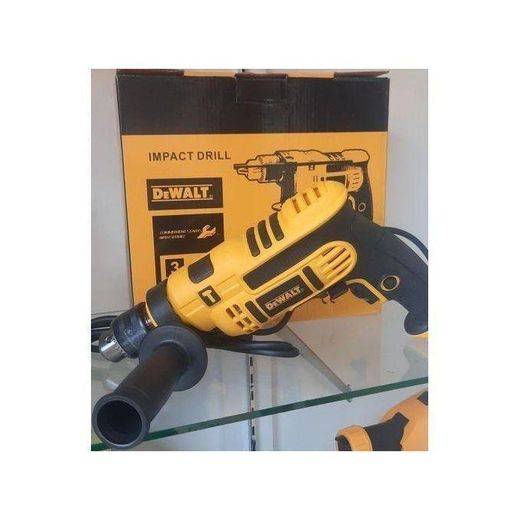
HomeHand drilling machine

Hand drilling machine

(933 products found)

Express

Frequently Asked Questions about Hand drilling machine

How do I choose the right hand drilling machine for my tasks?
Start by deciding between a corded model and a cordless set, based on where you’ll drill and how long you’ll work. Corded options like the 400W ROYCE RED 400 and other 500–700W drills deliver steady power for wood, metal, and plastic holes, with typical drilling up to 10mm. Cordless kits, such as 21V sets that come with a battery, charger, and toolbox, offer portability and convenience for light-to-moderate jobs and include no‑load speeds around 450 r/min. Consider future needs: a higher wattage or a 21V kit can cover a broader range of tasks.
What is the most complex feature to understand when comparing drills?
The most complex feature to understand is the combination of chuck size, speed control, and how they interact with material hardness. Some models use a 13mm keyed chuck, which accepts larger bits but requires a chuck key, while many mid‑range tools use smaller 10mm chucks. Speed varies widely: cordless 21V drills may offer 0–450 r/min, while higher‑power corded drills push up to 0–3300 r/min or more. This mix determines how smoothly you drill metal, wood, or plastic and how precise your hole size will be.
Which user types benefit most from cordless versus corded drills?
Casual DIYers benefit most from cordless kits that include a battery, charger, and toolbox, since they offer mobility for around‑the‑house tasks and basic wood/plastic work. Professionals or frequent workshop users gain from corded options in higher wattages (500–700W) or even 1300W, which provide sustained torque and larger hole capacity without worrying about battery life. The cordless sets typically feature no‑load speeds up to about 450 r/min, while larger corded models reach thousands of r/min for fast metal or dense wood drilling.
What maintenance or compatibility tips should I follow?
Keep the chuck and bits clean and match bit size to the chuck (10mm or 13mm) to ensure a secure fit. For cordless kits, follow sensible battery care: avoid deep discharge and store charged to preserve longevity; many sets include spare carbon brushes, so check their availability and replacement when needed. If you switch between models, verify the chuck size and max drilling capacity (10mm to 13mm) to avoid using bits that won’t fit. Always use appropriate drill bits for wood, metal, or plastic to protect the tool.
What accessories or features help me get the most from these drills?
Look for kits that include extras like a toolbox and a broad bit set, because they expand your immediate use cases. Cordless options often come with a 24‑piece bit set and a battery, charger, and storage case, while some corded units emphasize reliability with forward/reverse switches and variable speed control. Features such as a 1‑set extra carbon brushes provision can extend tool life, and a durable plastic housing helps keep the tool light. These elements together broaden your drilling options across materials.
How do power levels influence performance across this range?
Higher power generally means tougher materials and larger holes are easier to drill. A 400W drill handles common wood and light metal projects with up to 10mm holes, while 500–700W models keep steady torque for metal and thicker wood up to 10mm. The 1300W unit pushes drilling up to 13mm, suitable for denser metals or thicker sections. Cordless 21V tools balance power with portability, delivering roughly 0–450 r/min, ideal for lighter tasks and quick jobs in tight spaces.